Particle Tokenizer
Particle tokenizer encodes local interactions within topology-guided, particle-particle and particle-boundary branches.
SIGGRAPH Asia 2026
Unified World Simulation of Lagrangian
Particle Dynamics via Transformer
A unified simulator that can model diverse physical phenomena without solver-specific redesign is a long-standing goal across simulation science. We present a learning-based particle simulator built on a single transformer architecture to model cloth, elastic solids, Newtonian and non-Newtonian fluids, granular materials, and molecular dynamics. Our model follows a prediction-correction design on a shared Lagrangian particle representation. An explicit predictor first advances particles under the known external forces, producing an intermediate state that captures externally driven motion but not inter-particle interactions. A learned corrector then predicts the residual position and velocity updates through three stages: a particle tokenizer that encodes local particle-particle, particle-boundary, and topology-guided interactions; a super-token encoder that hierarchically merges particle tokens into a compact set of super tokens via alternating self-attention and token merging; and a super-token decoder that lifts these super tokens back to particle resolution through cross-attention to predict per-particle position and velocity corrections. Progressive token merging reduces the attention cost at successive encoder layers by halving the token count at each level, and the decoder communicates through the compact super-token set rather than full particle-to-particle attention. Across the six dynamics categories, the same architecture generalizes to unseen materials, boundary configurations, initial conditions, and external forces. We further demonstrate downstream interactive control, inverse design, and learning from real-world manipulation data, reducing the need for per-phenomenon solver engineering.
WorldParticle unifies simulation at the architecture and workflow level: we use a single architecture, one training recipe, and one inference codebase for all dynamics categories.
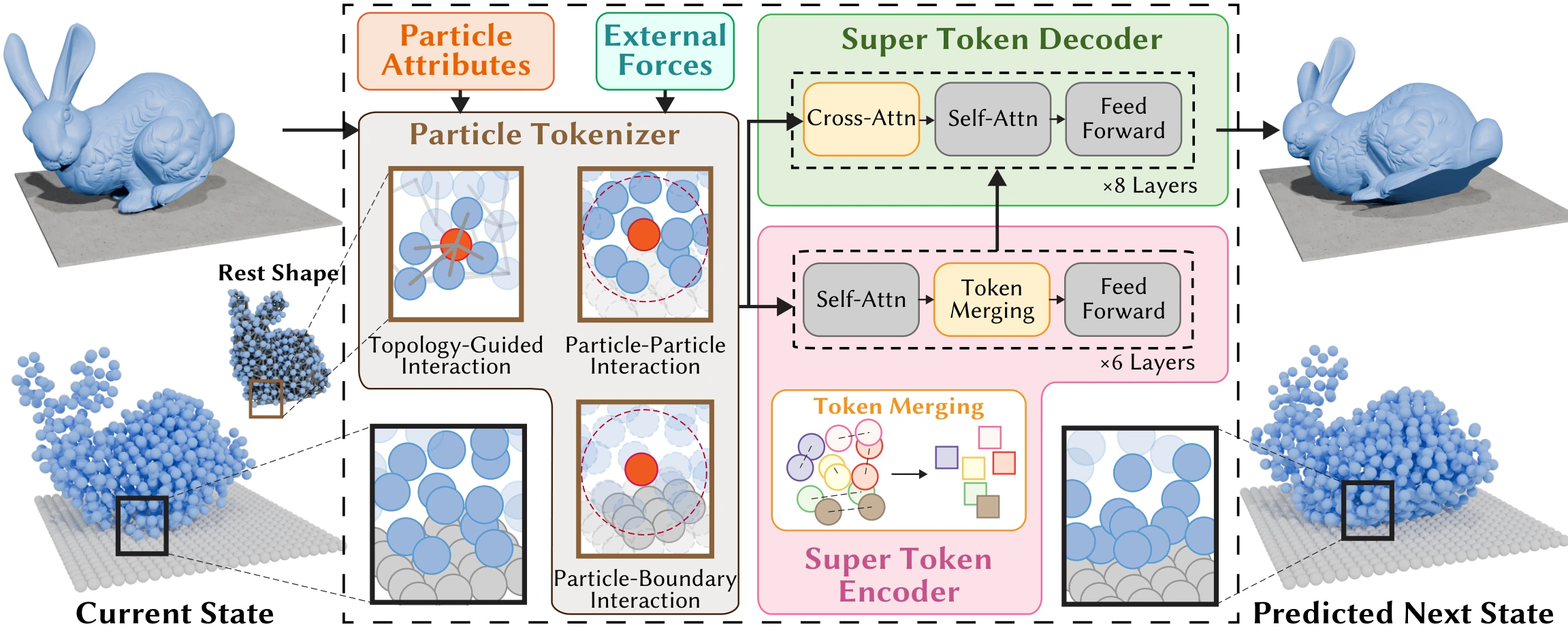
Our framework first handles known external forces with an explicit predictor, then learns a corrector that estimates residual position and velocity updates through a particle tokenizer, a super-token encoder, and a super-token decoder.
Particle tokenizer encodes local interactions within topology-guided, particle-particle and particle-boundary branches.
Super token encoder hierarchically merges particle tokens to build super tokens. Super token decoder recovers particle-level motions through a global-coupled attention mechanism.
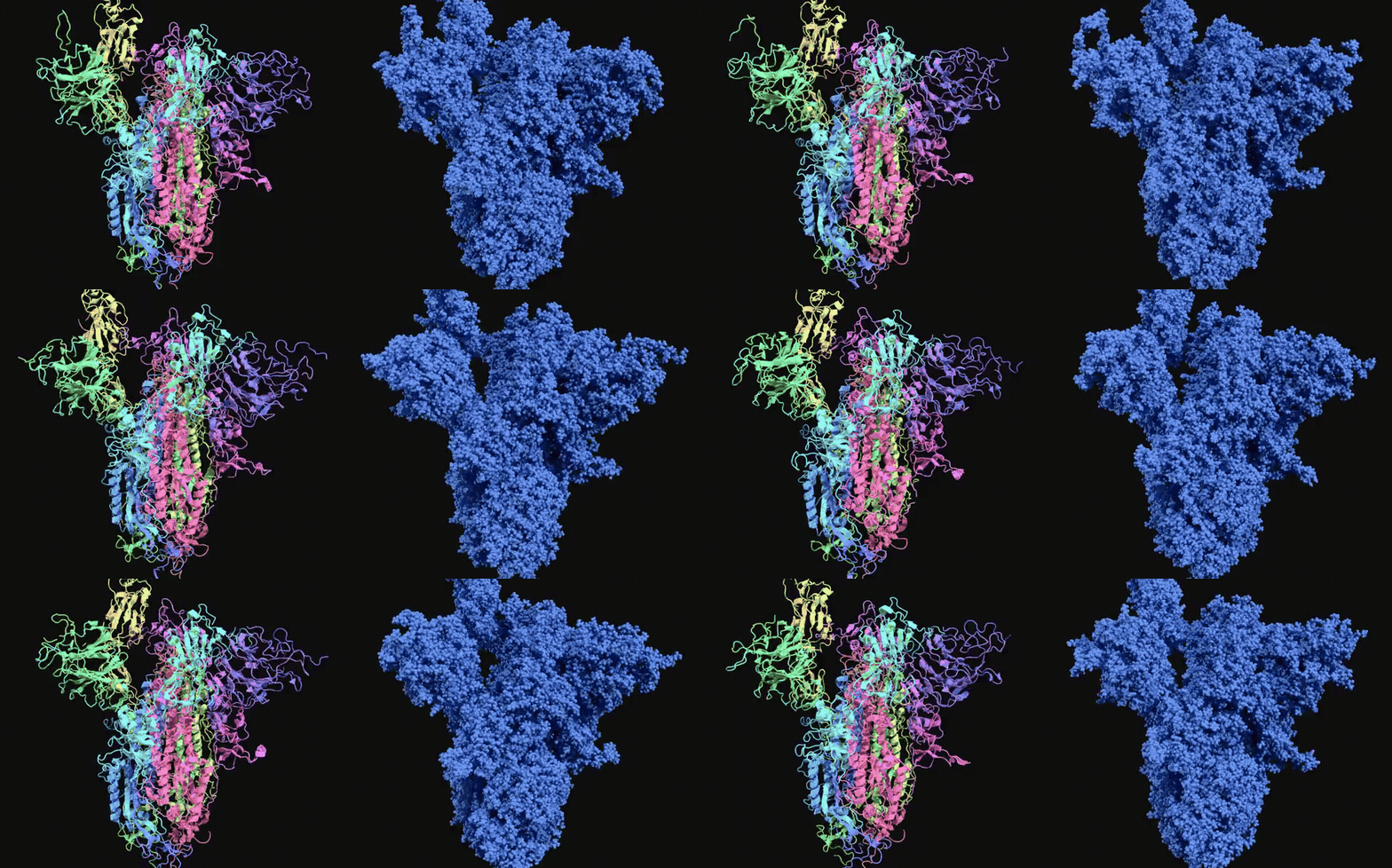
WorldParticle has been extensively validated across diverse phenomena, from microscopic protein motion to macroscopic physical simulations.
Unseen Young's modulus
Unseen obstacle positions
Unseen rotation
Unseen initial geometry
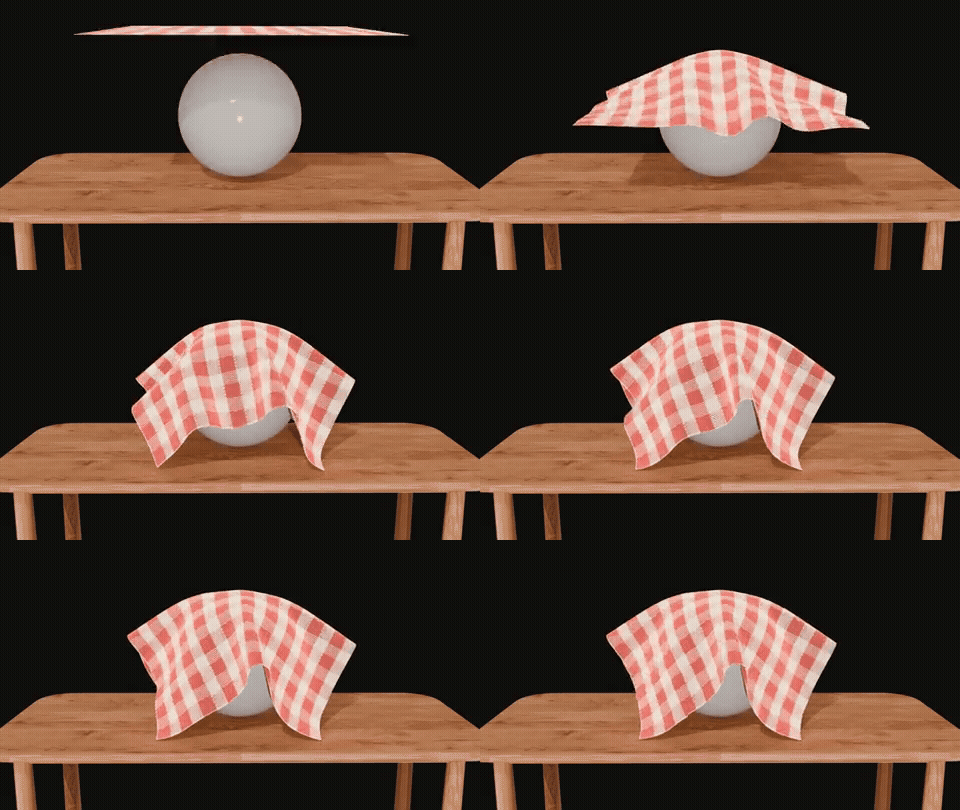
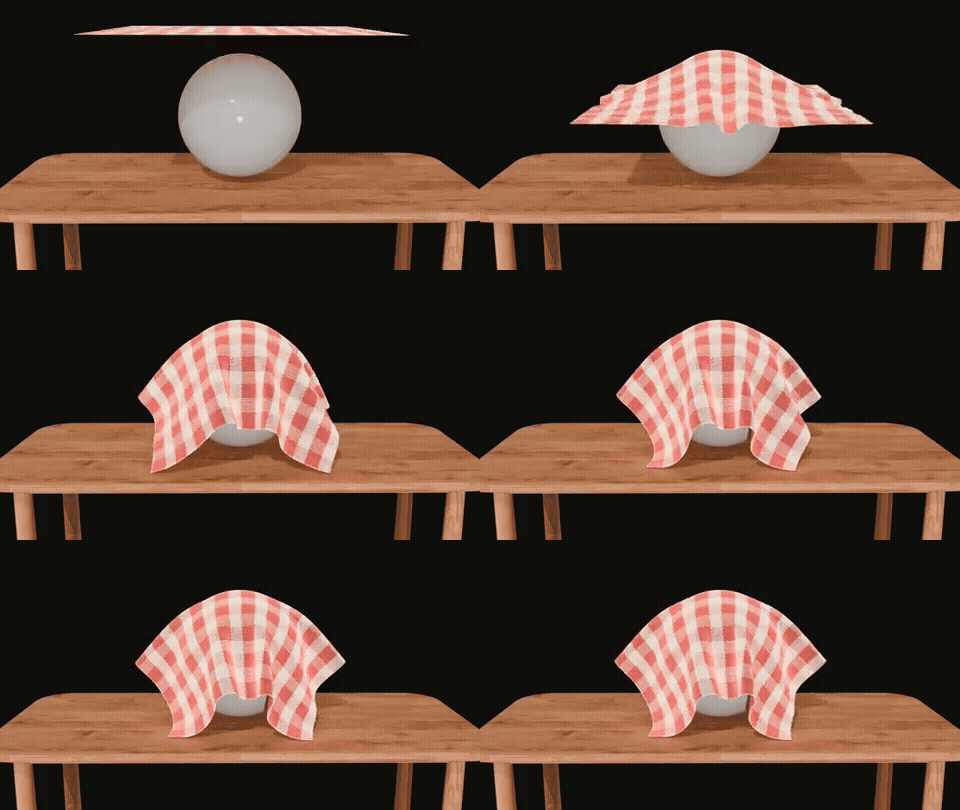
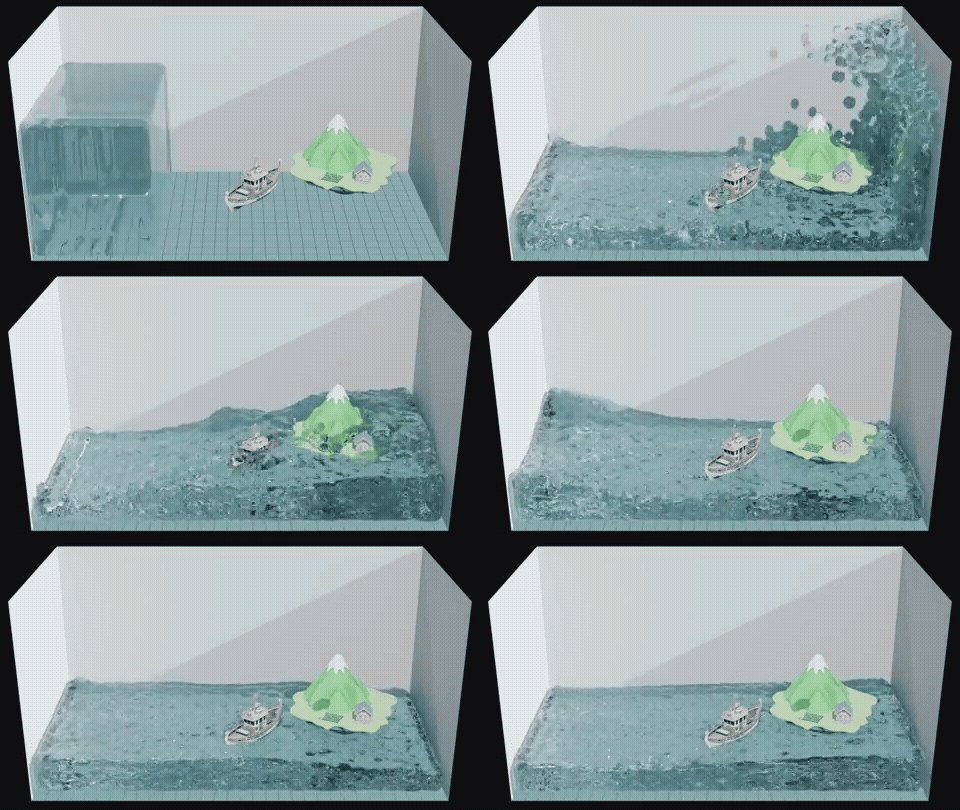









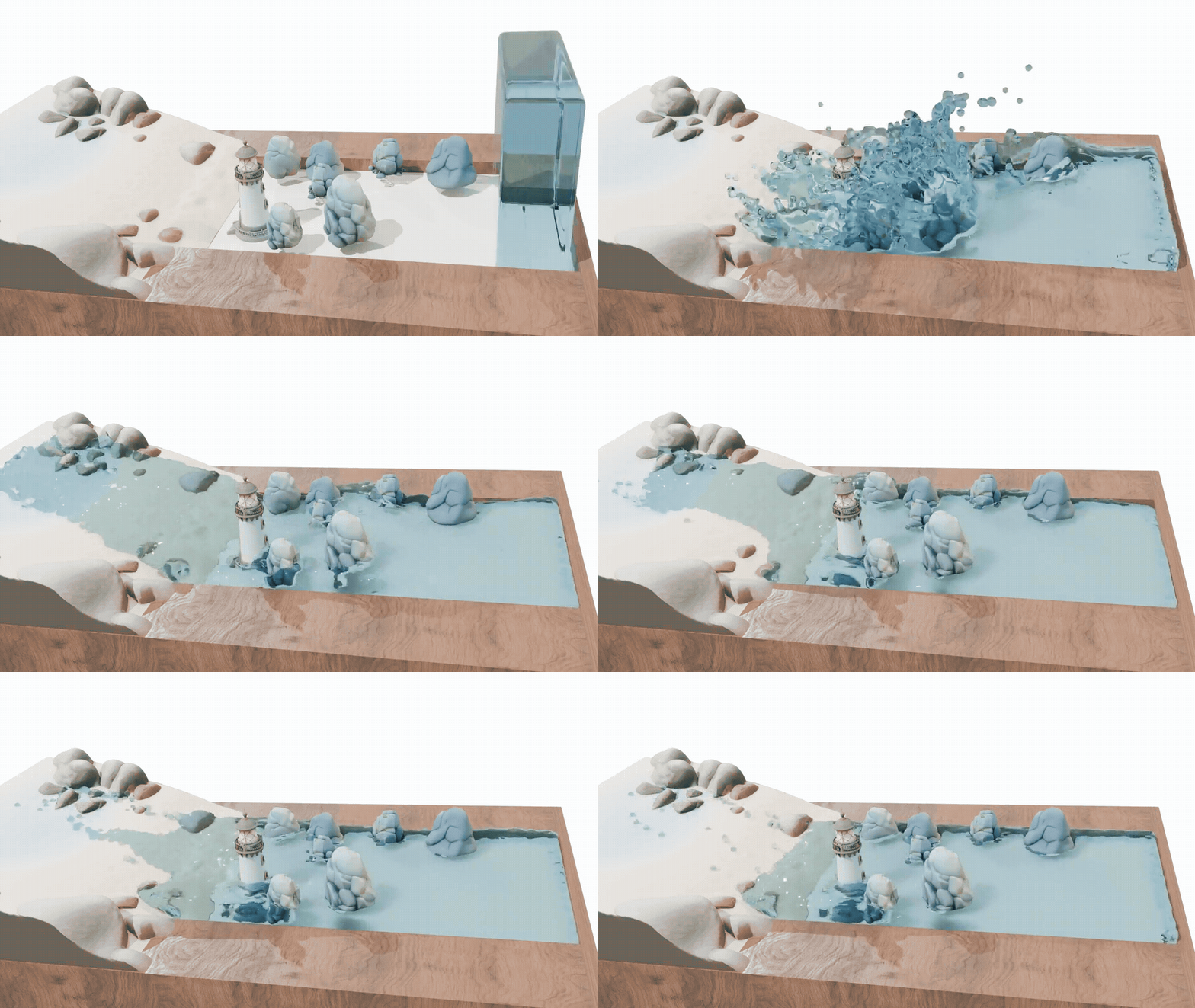
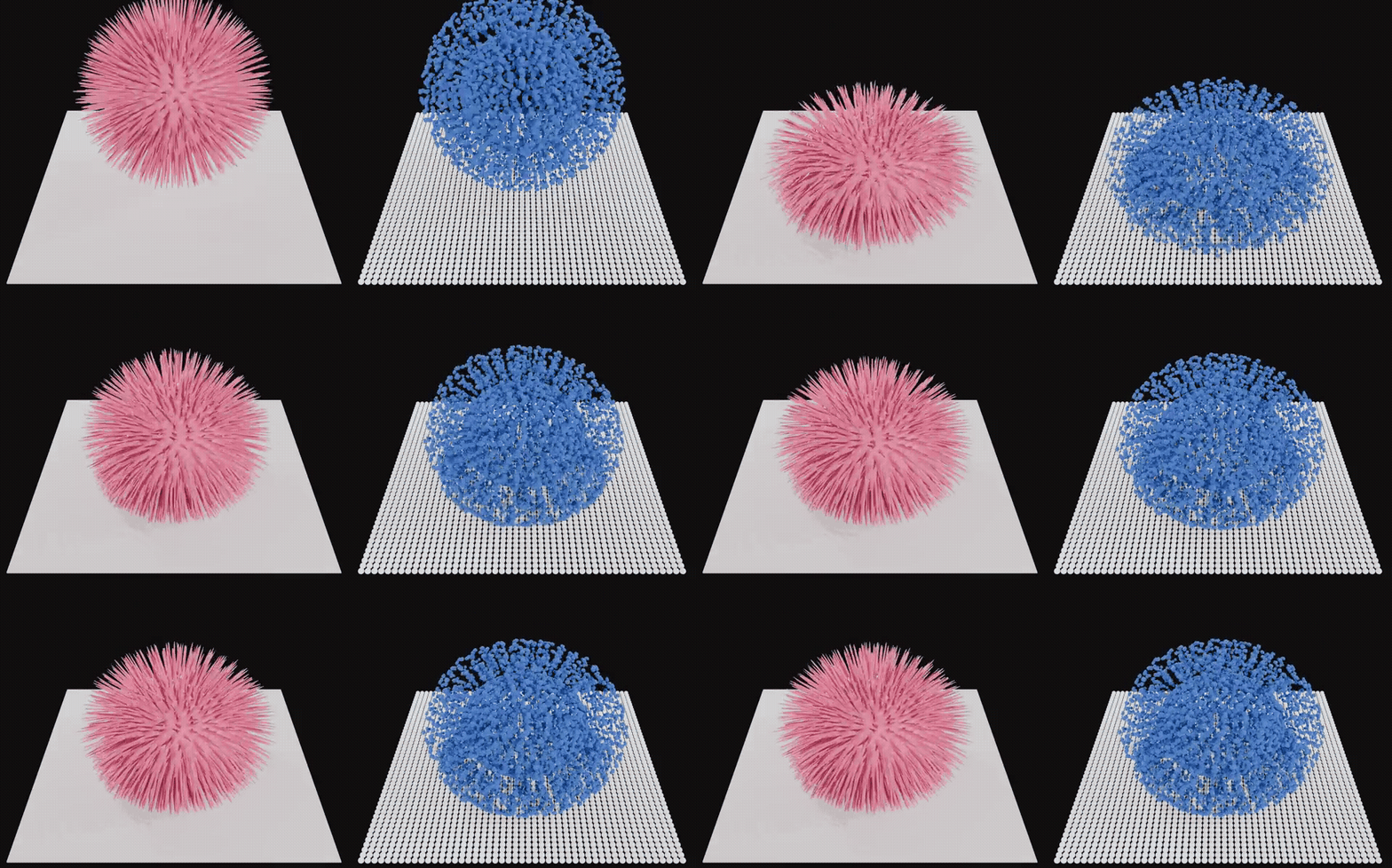
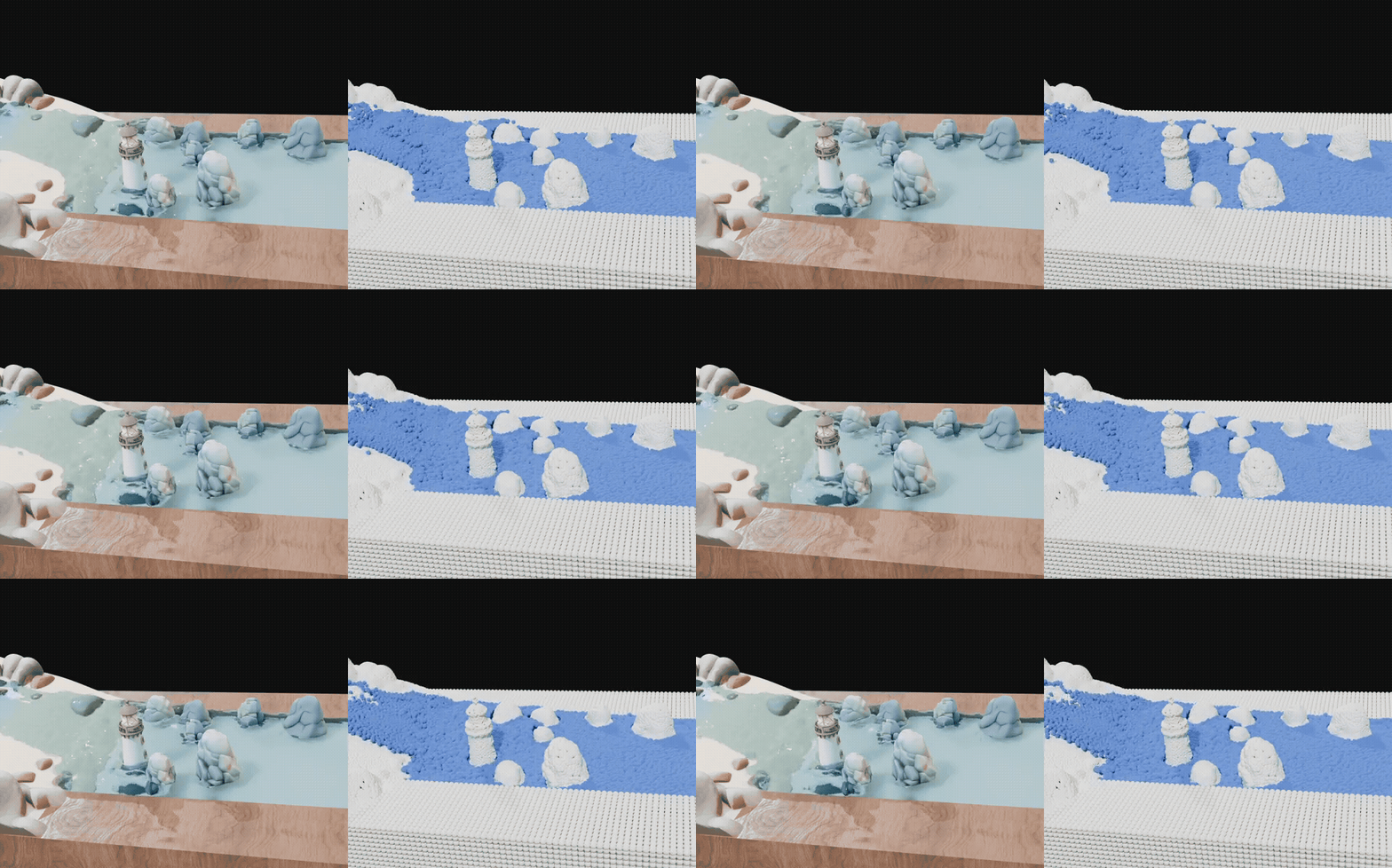
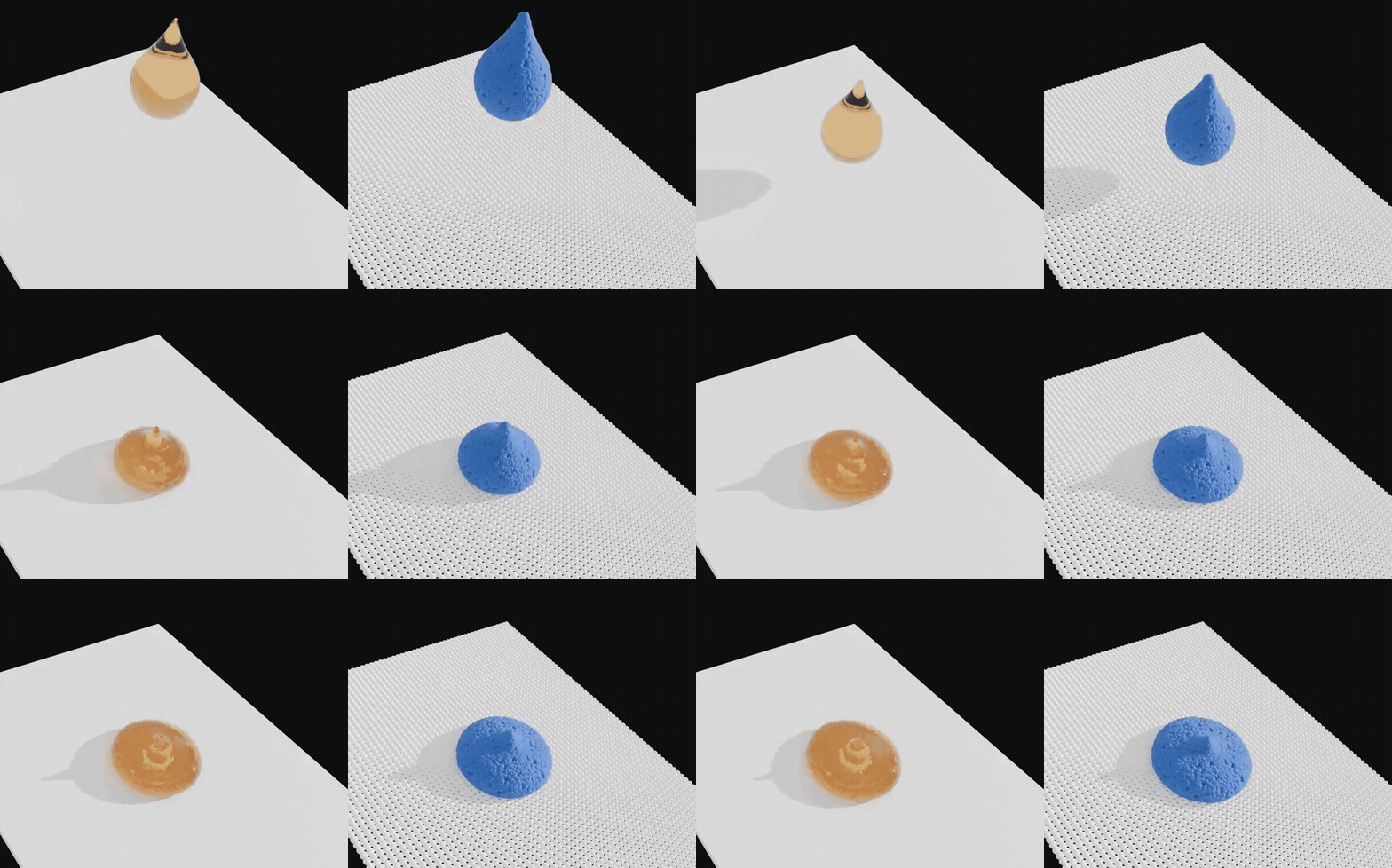
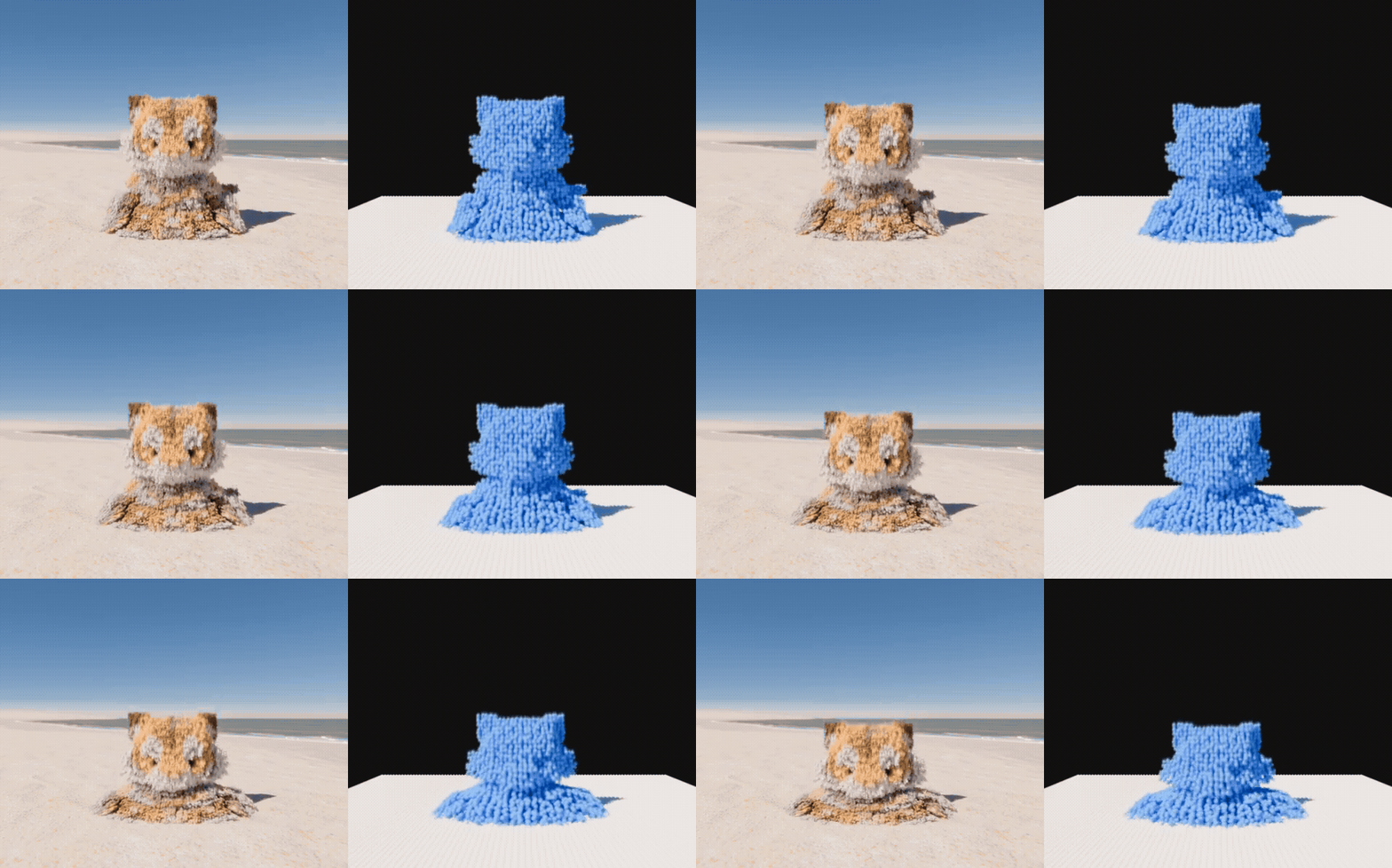
Example sequences show cloth colliding with a sphere with various Young's modulus; Newtonian fluids flowing with varying viscosity and obstacle placements in a container; granular sand collapsing with varied initial shapes and friction; non-Newtonian fluids with varying rheological properties on different slopes; and elastic solids with varying initial rotations on a fixed slope. All test sequences use unseen configurations.
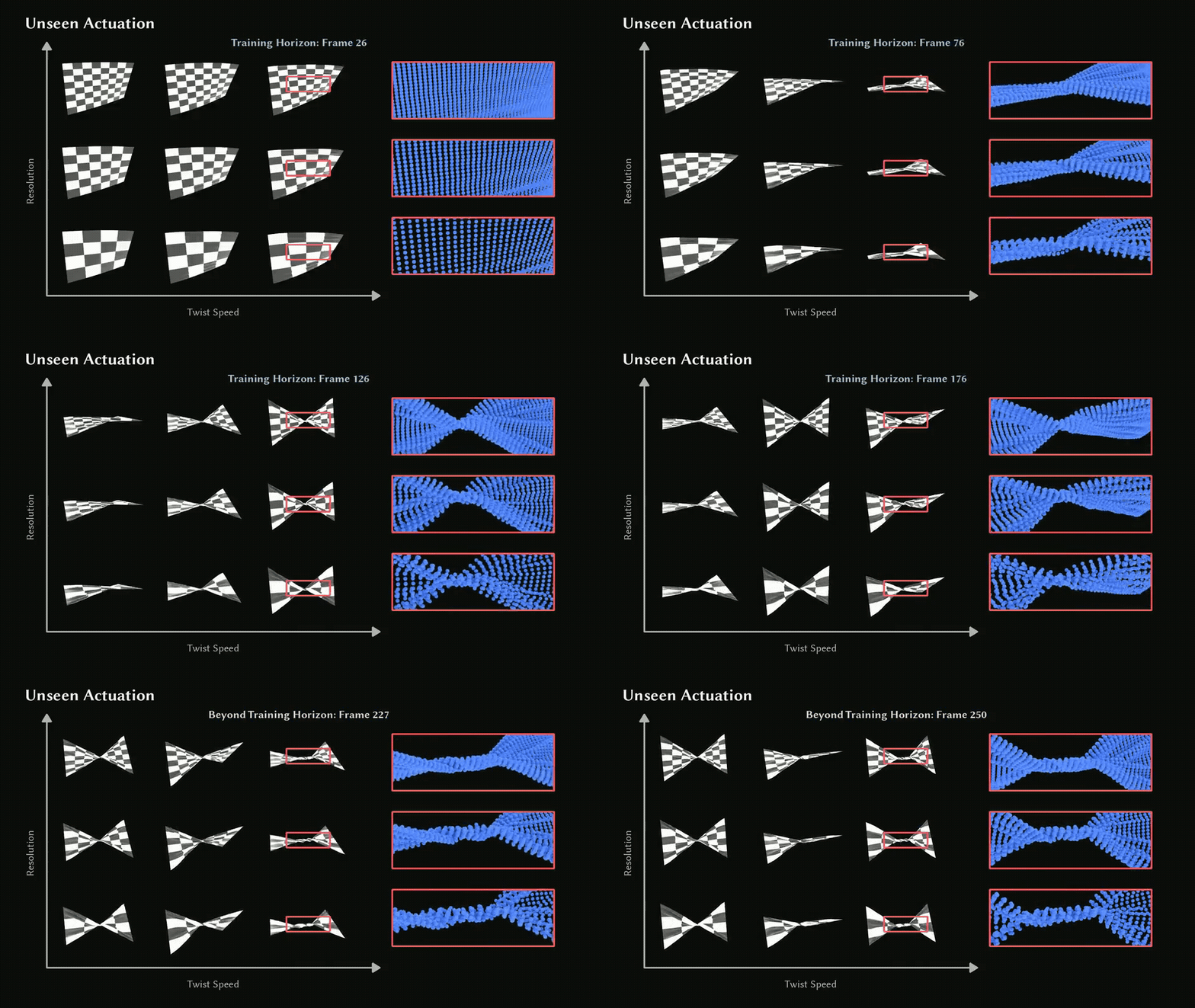
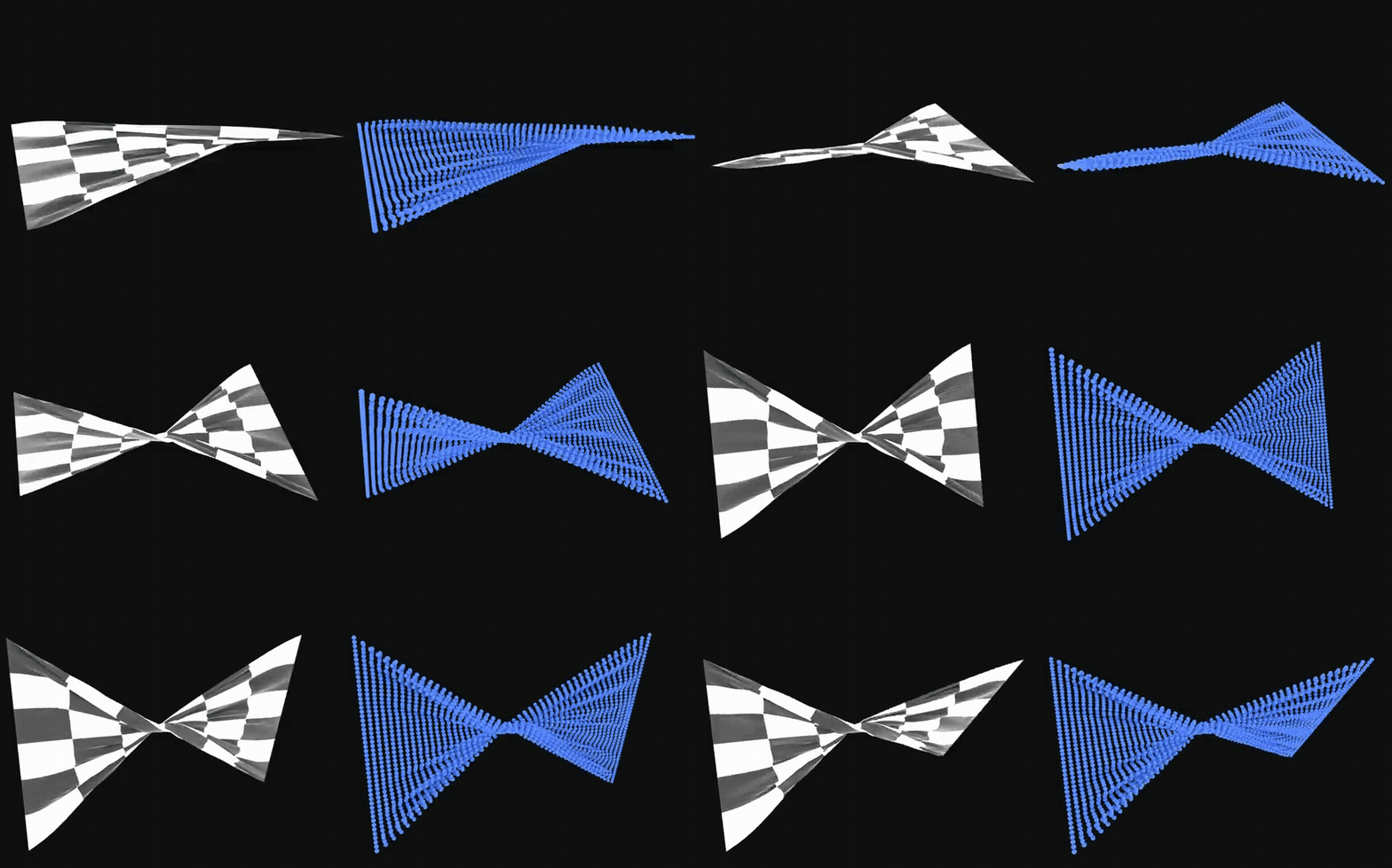
Cloth-twisting sequences use actuation strengths not observed during training. WorldParticle remains stable for 250 frames, beyond the 200-frame training horizon.
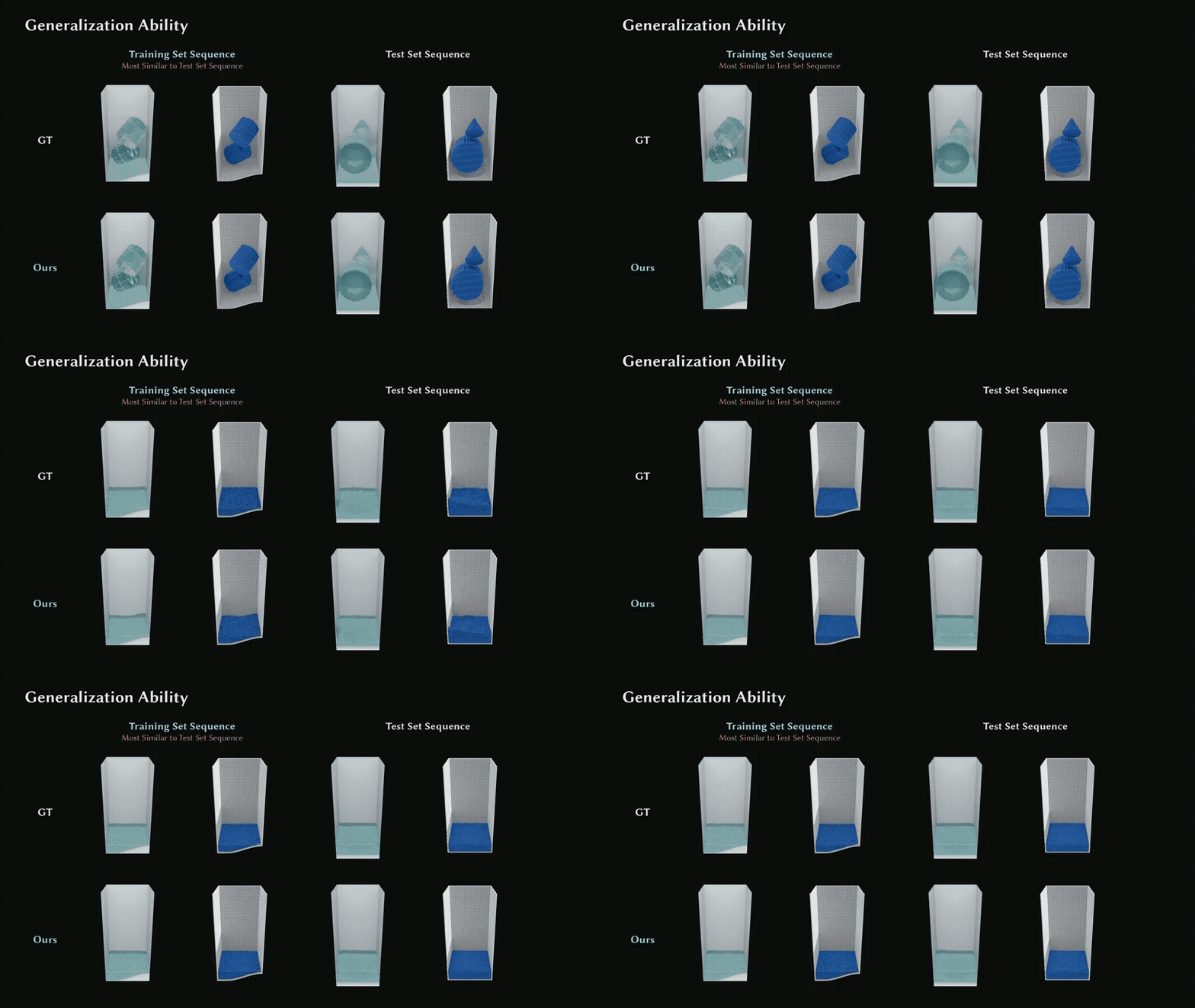
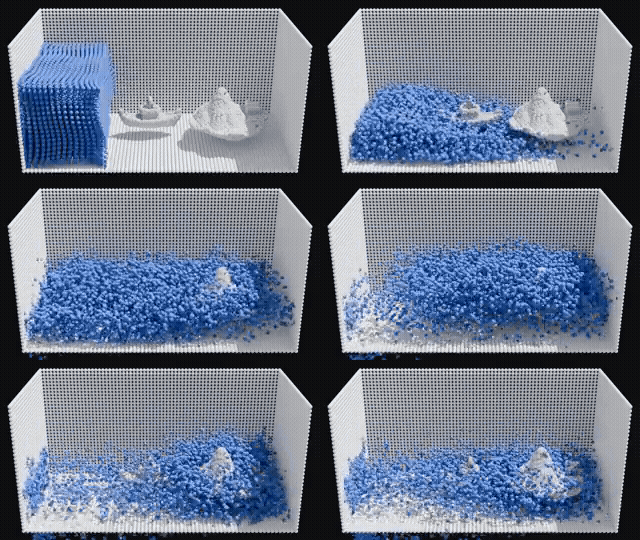
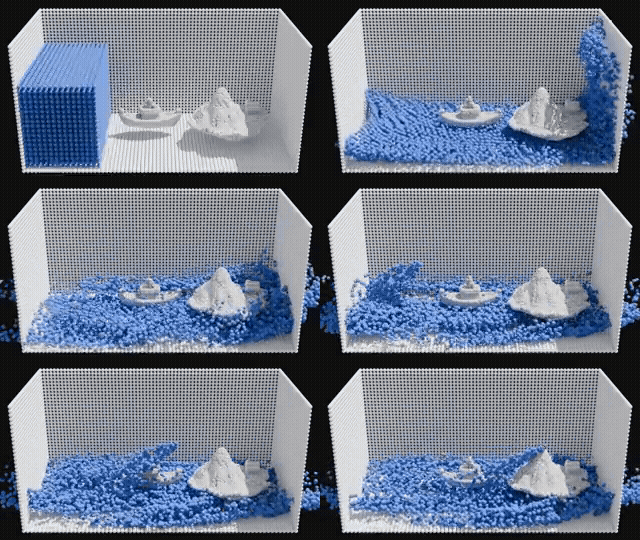
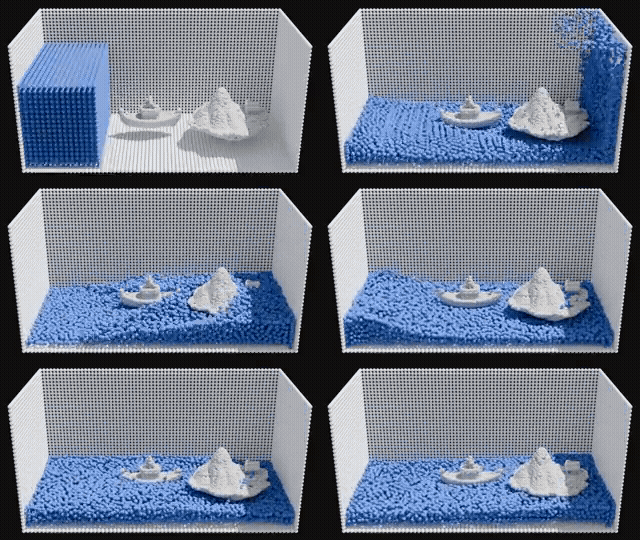
The closest training example and an unseen test sequence are compared. Orange boxes highlight differences in fluid volume and container geometry.
WorldParticle remains stable for up to eight hundred rollouts in the fluid experiment, demonstrating better performance and stability than other neural simulators.






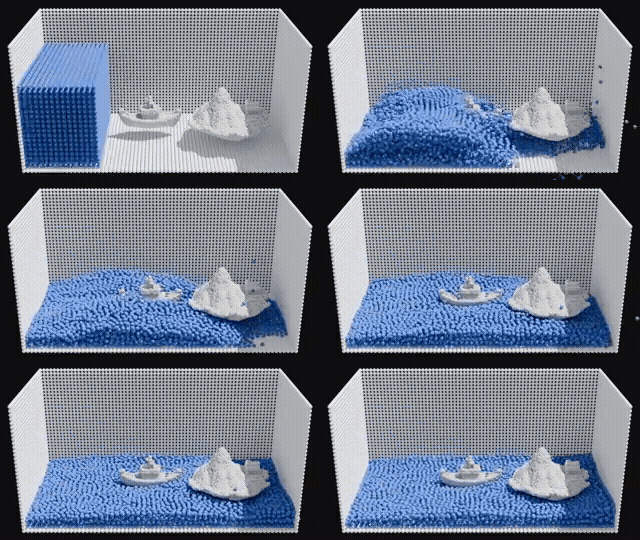
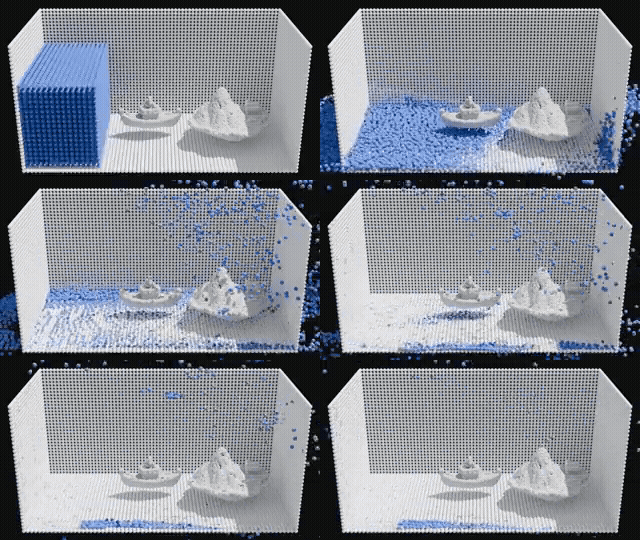
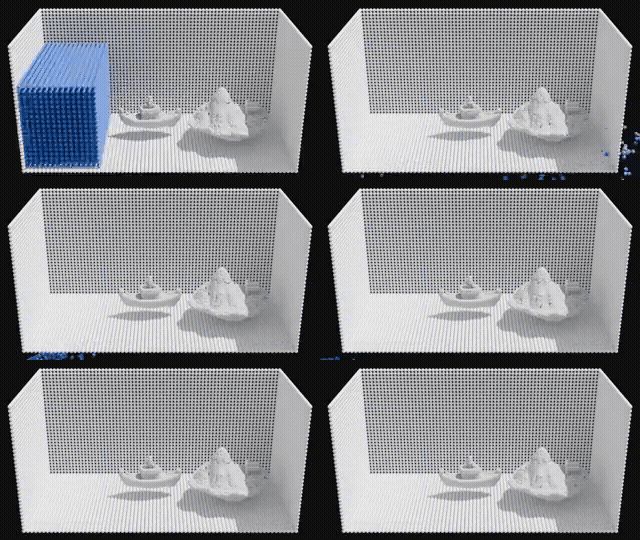
WorldParticle is expected to unlock several applications across a broad frontier yet to be explored. We demonstrate interactive control and inverse design, while unlocking new capabilities through molecular world models and real-world simulators.
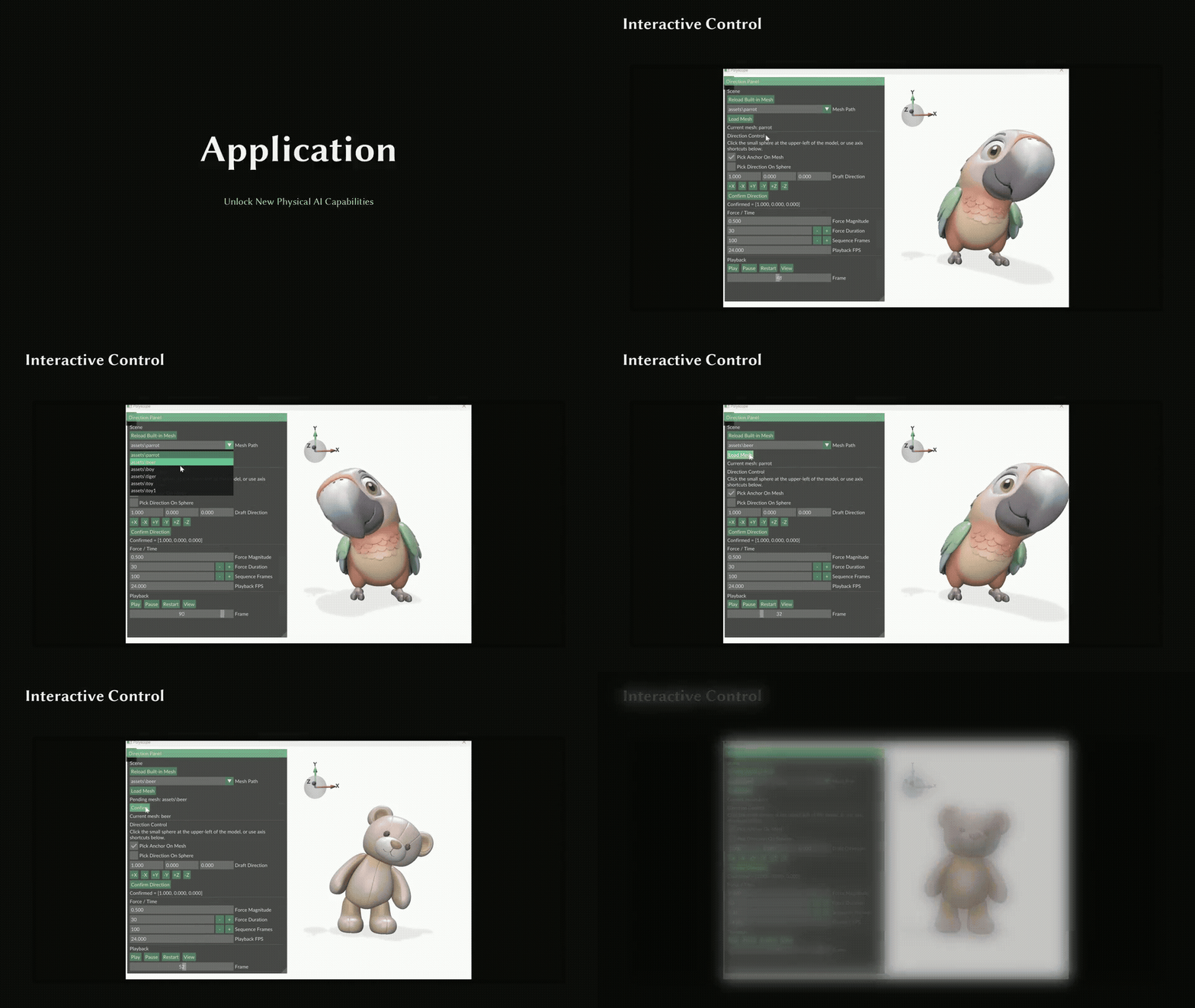
Our framework generalizes to unseen force configurations because the prediction step explicitly integrates external forces, while fast inference enables interactive applications.

Our framework enables inverse optimization because gradients can be backpropagated through autoregressive neural rollouts.
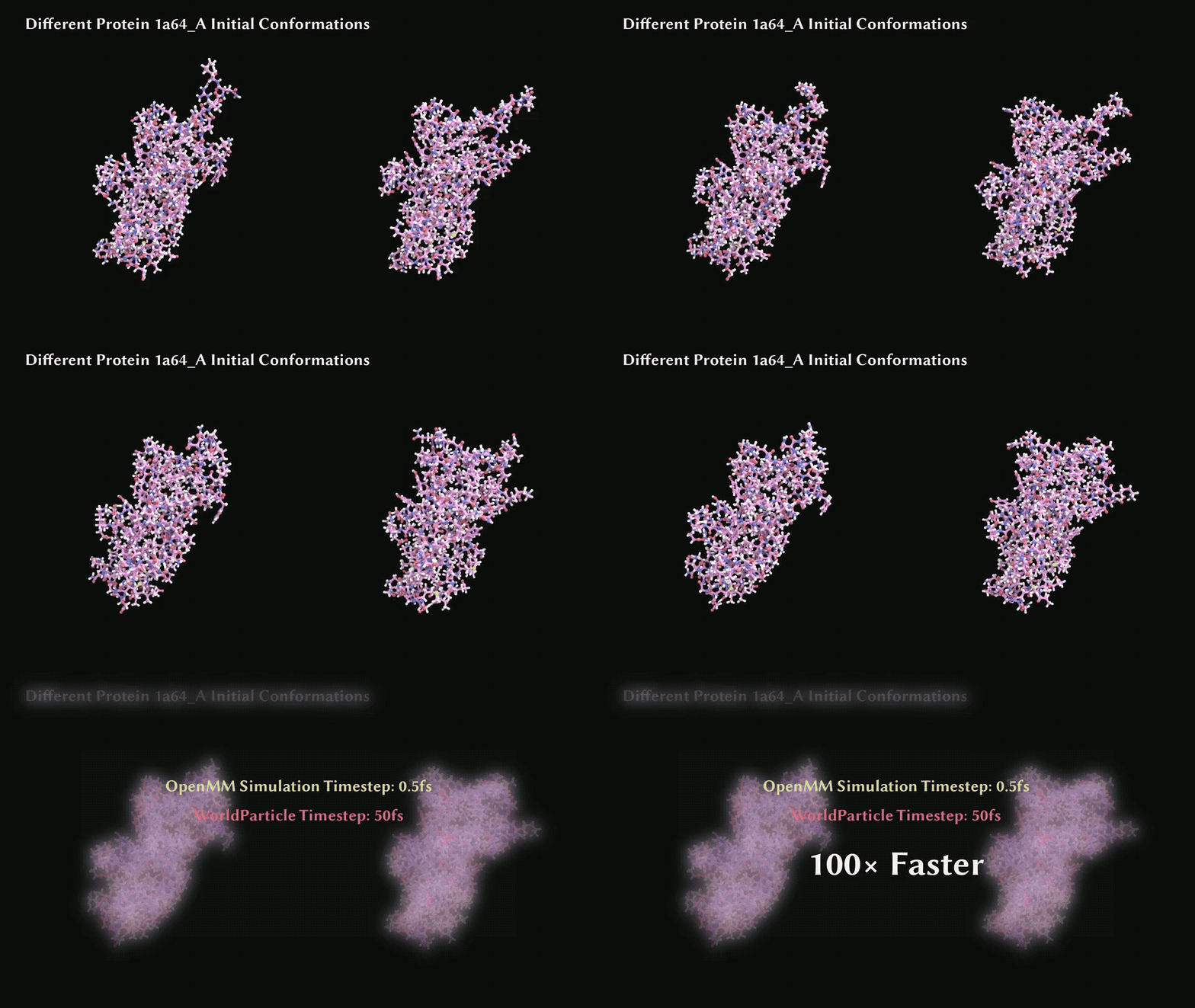
Our framework predicts side-chain rotational dynamics at 50 fs timesteps, 100× larger than the 0.5 fs steps used in traditional OpenMM simulations, while its strong generalization enables a Molecular World Model for predicting future molecular dynamics.
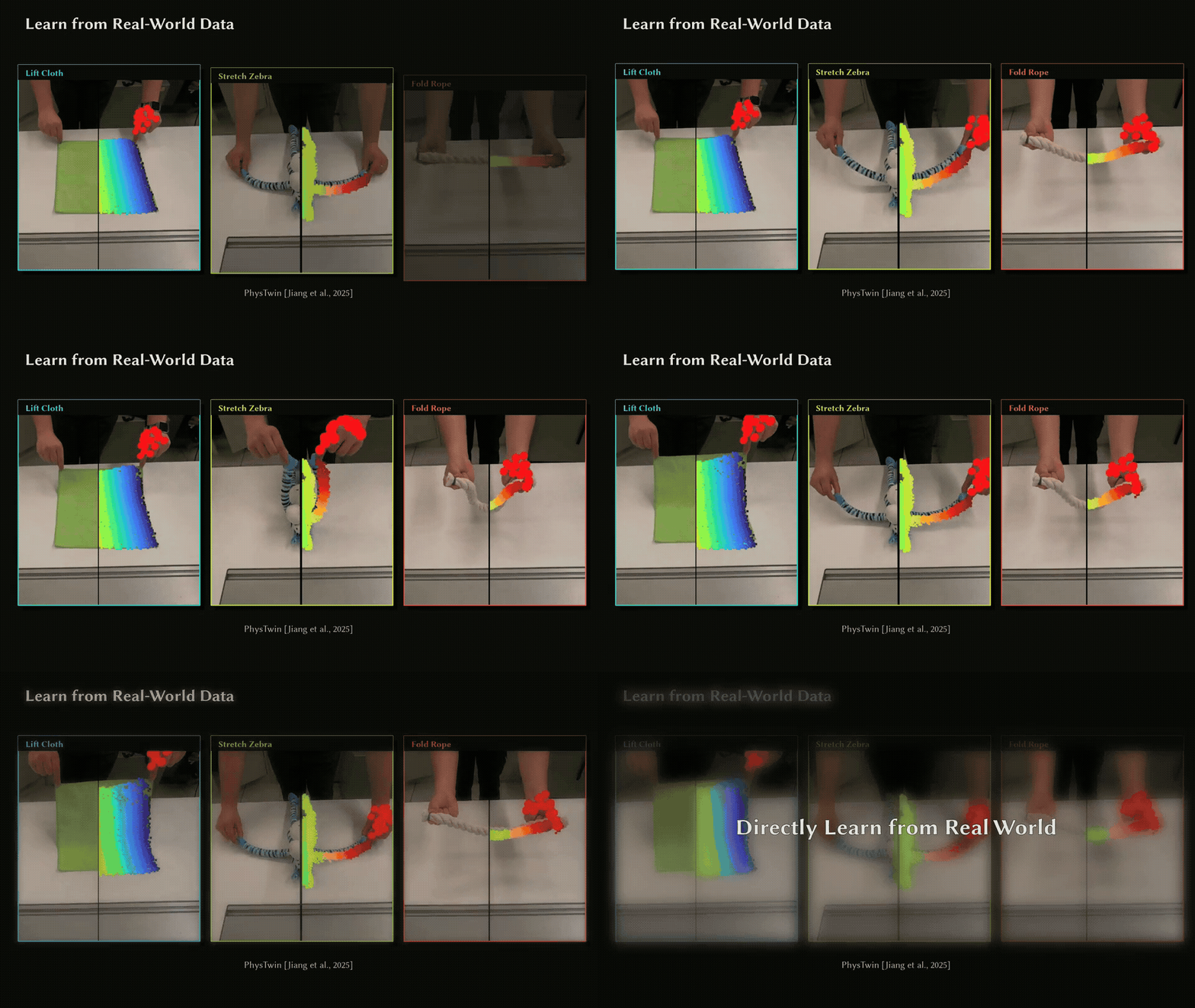
Our framework directly learns dynamics from real-world point cloud observations because it operates on particle representations, without requiring a classical simulator.
@article{wang2026worldparticle,
  title   = {WorldParticle: Unified World Simulation of Lagrangian Particle Dynamics via Transformer},
  author  = {Wang, Caoliwen and Guo, Minghao and Chen, Siyuan and Zhang, Heng and Wang, Mengdi and Ni, Xingyu and Sun, Hanson and Wang, Kunyi and Pan, Zherong and Wu, Kui and Liu, Lingjie and Yang, Yin and Jiang, Chenfanfu and Komura, Taku and Matusik, Wojciech and Chen, Peter Yichen},
  journal = {arXiv preprint arXiv:2605.15305},
  year    = {2026}
}